At Rufino’s, in Salobreña: “it was like my gift to people”
On October 27, 2024, in the office of a warehouse in Salobreña, Rufino Ruiz Casado, Fruitstock’s longtime producer, tells how it all began: cherimoyas on the ground, a fair, a dream of a big farm. Then February 2025, in the orchards.
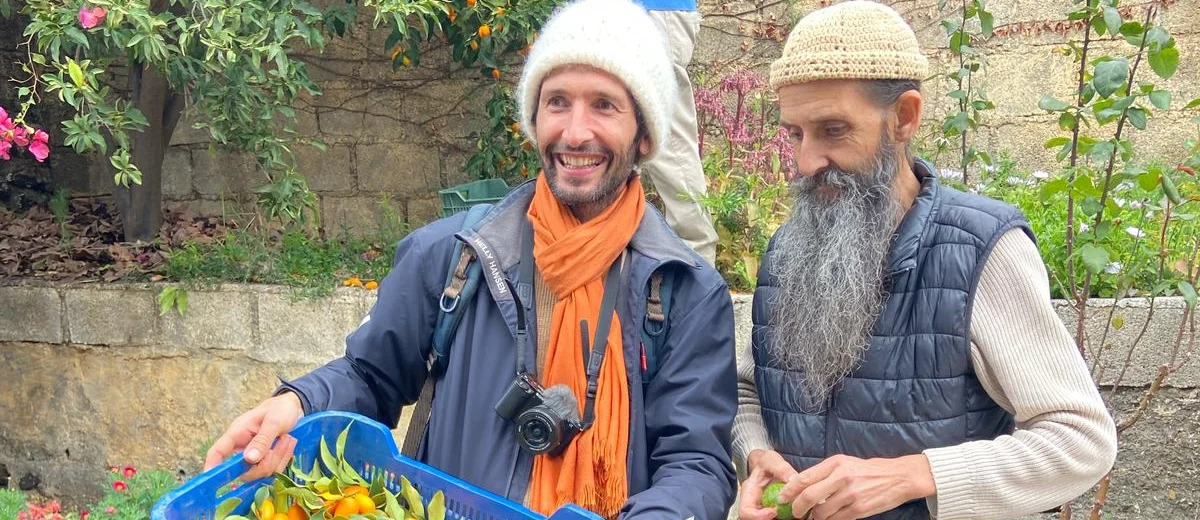
When we order fruit, we would like to know who stands behind the crate. On October 27, 2024, in the office of a warehouse in Salobreña, Andalusia, Virgile set his camera in front of Rufino Ruiz Casado, Fruitstock’s longtime producer. He put it simply: he wanted to show the people who start these businesses, and who make it possible for us to eat such good fruit.
An interpreter translated. Here is what Rufino told us, tightened up, and then what we saw in his orchards in February 2025.
It all started with a change of diet
Rufino says it himself:
Rufino: “It wasn’t a planned project, like: I’m going to do this. I was living in Madrid when I changed my diet.”
For him it was a conviction, one he could check on himself:
Rufino: “It was as if I had found a truth: we are frugivorous hominids, and fruit is our ideal food.”
In Madrid he read the books of hygienist authors, all of them French, among the first works on raw food translated in Spain.
Rufino: “The climate must be warm too, a comfortable place for us. And the closest I had was here.”
Rufino: “I arrived here and found all of this, with the cherimoyas on the ground… I said to myself: wow, great!”
Cherimoyas, and a fair
He rents a farm, and the cherimoya trees bear fruit. Then comes the question:
Rufino: “When the cherimoyas came, I said to myself: wow… and now, what do I do with all these cherimoyas?”
The answer comes down to one name: Biocultura, a fair where he already knew people.
Rufino: “I knew Biocultura, the fair. I said to myself: I’m going up to Biocultura. And it was very easy.”
They told him: send us some every week.
Rufino: “That’s how we started, and then new customers ended up arriving.”
“Like my gift to people”
In Rufino’s voice, there is no career plan, just a quantity that was going to stay on the ground:
Rufino: “There was such a quantity… and it was all going to be lost. It was like my gift to people.”
Rufino: “I would take things and give them here and there, to share them. All of it was a bit spontaneous.”
What he looks at on a farm
Rufino knows many farms. What he looks at first: herbicide. For avocado and cherimoya, it is what makes the difference. When a grower puts on manure and cuts the grass without herbicide, he is one step from certification: those are the two things that separate organic from the rest.
So why do so many small growers not take the certificate? You have to keep a field logbook, a record of what you buy and what you apply, and note who you sell to. Every visit has to be paid for, and so does every leaf or soil analysis. That year, he says, a grower of Brown Turkey figs had just left organic: garlic extract and everything the specifications allow, nothing had worked against the fly, which had stung 80% of the harvest.
Hence the two labels in the Fruitstock catalog. “Bio”: the grower is registered, and the word is like a registered trademark. “CN”, culture naturelle (natural farming): the grower farms in the same way, but without the certification paperwork.
People found little by little
The year before, for the pitaya, Rufino met a man who grows it better than the others. He is a former mechanic, close to retirement age.
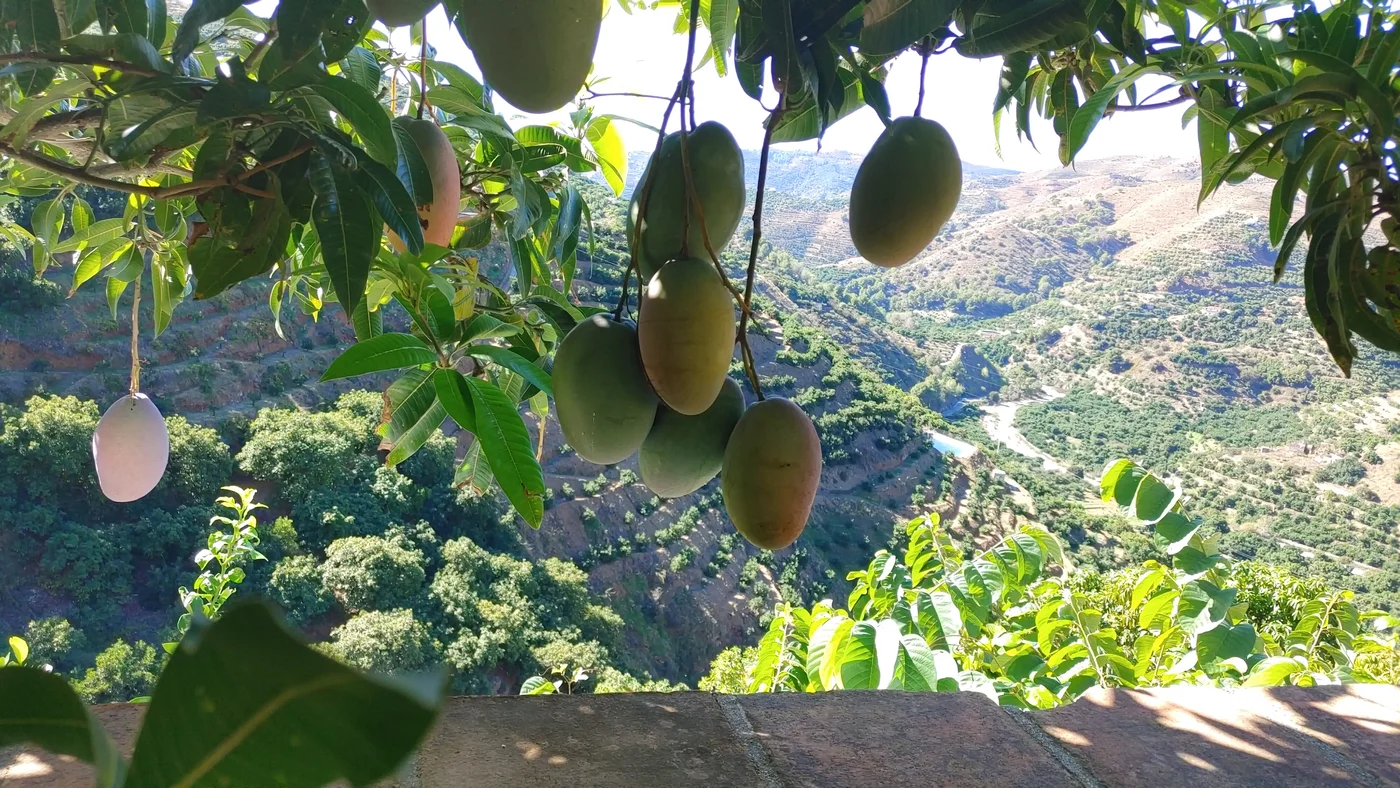
Rufino: “He does that now, and it’s fantastic, how well he works. His fruit has real quality, because he also lets the mangoes take on their color.”
There is also an agricultural engineer approaching 80, and his fermented olives. Rufino met him at a fair, where the man told him about his dried persimmons and his olives.
Rufino: “He was an agricultural engineer, and he is very precise about everything. He brought me a sample, and we saw that people liked it.”
Rufino: “And that is one of the values of the work: having found all these people, little by little. It isn’t easy.”
February 2025, in the orchards
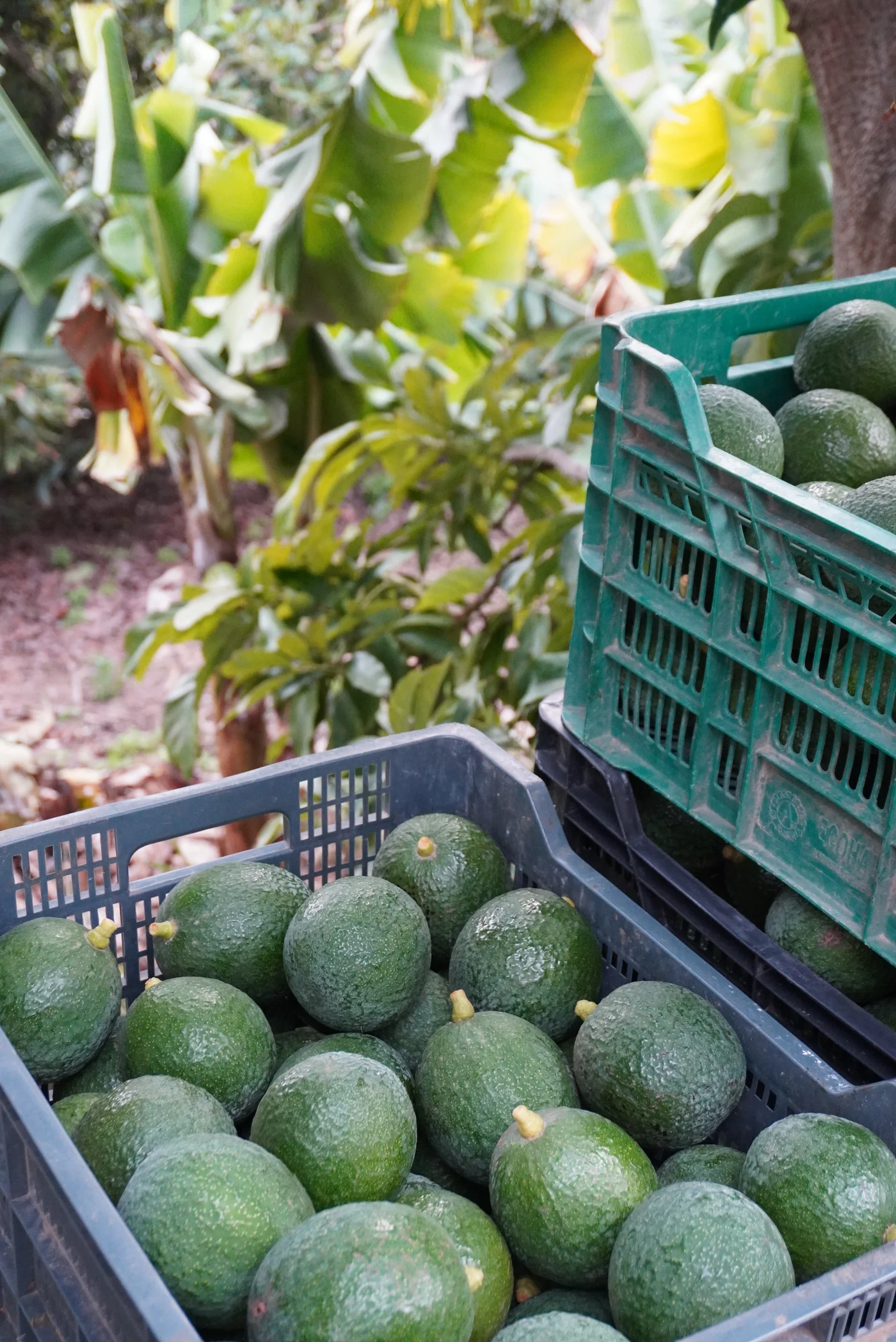
We came back with the Fruitstock team. In one orchard, two pickers are bringing down avocados: one by hand, trimming the stem again with pruning shears, the other at the end of a very long reed pole. Virgile laughs and calls out:
Virgile: “Avocado fishing!”
The fruits are Reeds. In front of the stack of crates, Rufino picks up two, nicely round, and names his favorite variety:
Rufino: “For me, the Bacon.”
Further on, in a citrus orchard, he holds two big pomelos and picks up from the ground a half with bright red flesh: a Star Ruby, red inside. And he comes back to the tree:
Rufino: “They are best like this, picked from the tree… it’s the best.”
Under an orange tree hangs a plastic bottle pierced with a black tube.
Rufino: “A trap for the fruit fly. It goes in here, attracted by the smell, but then it can’t find the way out.”
Virgile asks him which fruits he eats through the seasons. He answers by following the year:
Rufino: “It depends on the season, so I change. Right now passion fruit, cherimoya, avocados… But let’s say that avocado, mango and cherimoya are almost the fundamentals. Ah, and papaya! Lately, a lot, a lot.”
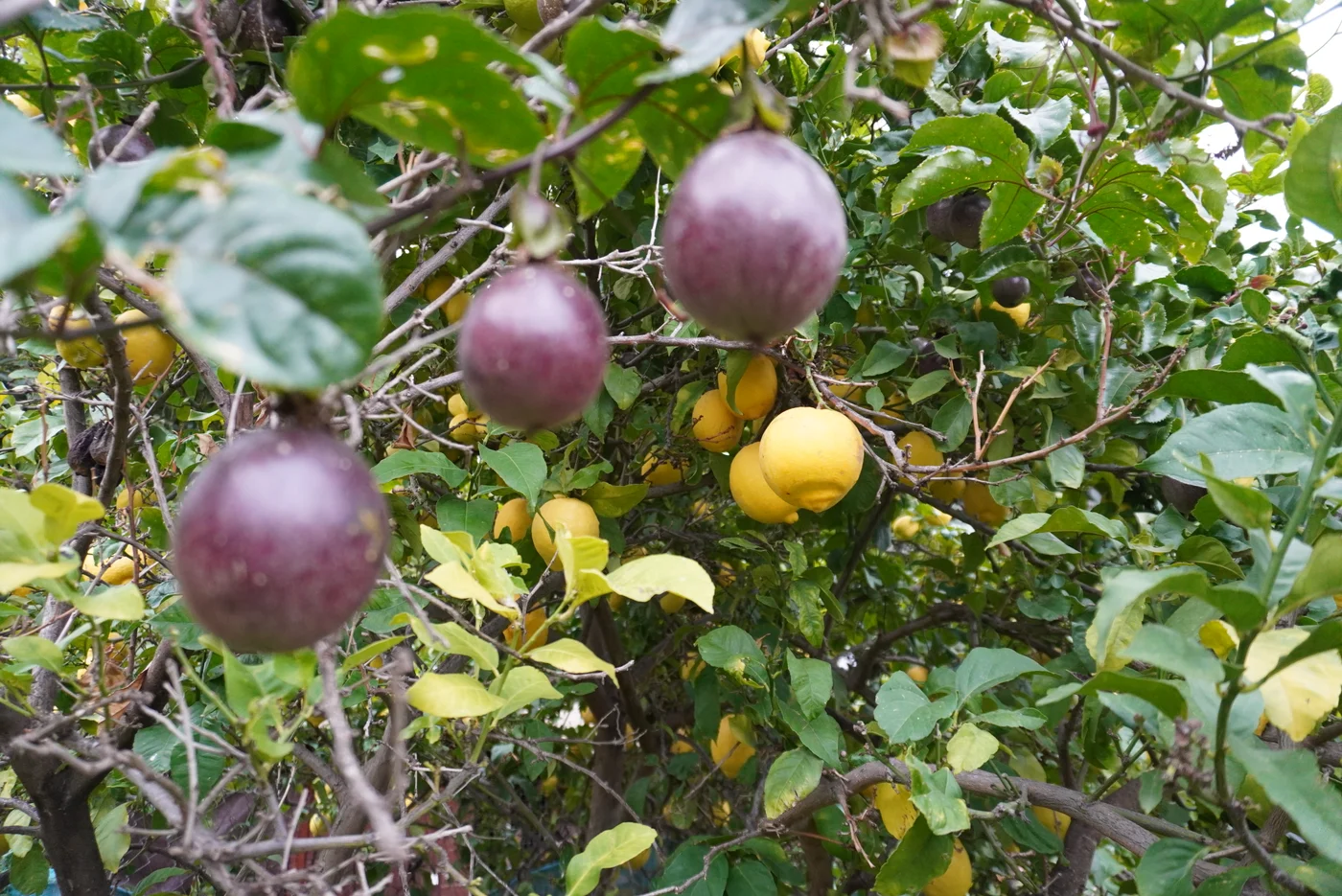
We find these fruits one by one in our guides: avocado, mango, citrus fruits. And to receive fruit picked by these hands, you can join a Fruitstock group (partner link).
His dream: eating in the tree
Selling fruit was not his starting project. He dreamed of a place to welcome people.
Rufino: “My main idea was for people to come and eat here. And that pleasure of eating in the tree.”
Rufino: “It would be something I’d like: to invest in a beautiful big farm, with many varieties, and a place where people can come, stay and enjoy a little of this.”
He keeps his feet on the ground: sometimes you build yourself an illusion, and once you are there, you don’t like it that much. And what keeps him going, he says at the end of the interview:
Rufino: “I like to experiment: we’re going to try to do this like that.”
Virgile thanks him for his open mind and for all the products he shares. Rufino answers:
Rufino: “I’m glad you like it, and that there is someone who appreciates it.”
Written by
Virgile
Chef & researcher in plant nutrition
20 years of research. Resident chef at Maison ilā (The Times Top 50 World Spas). Founder of levegetalien.fr. I formulate foods that transform how we feel and think.
Receive the Notebook
Every Tuesday, one ingredient to understand. One page, a recipe, a find. And when we meet someone who deserves it, their portrait. In your inbox, quietly.
Related articles
Why Go Plant-Based — The Body, the Heart and the Earth Have Already Answered
Let's seek nuance and clarity on a subject we've made needlessly complex.
Chef Végétal Is Born: The Platform to Invite a Plant-Based Chef to Your Home
Dinner, chef by your side, workshop, retreat, stay: Chef Végétal is the platform to invite a plant-based chef to your home or to a guesthouse. Where it comes from, and what it offers.
Ibiza Regenerates: Juntos Farm, Tierra Iris and Terra Viva — An Island Reinvented
In Ibiza, three regenerative farms — Juntos Farm, Tierra Iris and Terra Viva — are turning the island into a living laboratory of food sovereignty.