

Ducasse & Passard: When Great French Chefs Embrace the Plant
Two three-star legends have chosen the plant as a pinnacle rather than an accompaniment. A quiet revolution that redefines French gastronomy.
When a twice three-starred chef banishes meat from his Parisian temple, and another three-starred chef goes fully plant-based after thirty years of maturity, the message is clear: the plant isn't the future of gastronomy — it is already its present.
These two men are not activists. They don't carry placards. They wear aprons — and their plates speak louder than any manifesto. Two Alains, two different paths, one same convergence.
Alain Ducasse — Naturality as Revolution
The man and the Plaza Athénée turning point
Born in Gascony, rooted in terroir tradition, Alain Ducasse is the most famous French chef of his generation. Twenty-one Michelin stars cumulated, a restaurant empire, and yet in 2014 he chose to question it all: reopening the Plaza Athénée without meat.
The principle of naturality becomes his compass: a trilogy of fish, grains, vegetables. So-called humble products — sardines, pollack, squid — ennobled by technique. Heritage grains — Khorasan wheat, spelt, Camargue black rice, Anjou quinoa — treated as noble cuts.
Partnership with the Queen's Garden at Trianon, in the Château de Versailles: a strong symbol, the royal vegetable garden serving the cuisine of tomorrow. Executive chef Romain Meder embodies this vision with almost monastic precision.
A humanist philosophy
"Eating in a healthier, more natural way is today an expectation and a necessity that it is time to translate into the field of high cuisine."
Ducasse doesn't oppose pleasure and ethics. He proposes a reversal:
"Instead of eating 80% meat and 20% side, we should be eating 20% meat and 80% side."
His thinking is also political:
"It is a humanist political statement! There are one billion overfed people and one billion underfed. If the overfed consumed less animal protein, the underfed would have enough to eat."
Books, transmission and accessibility
- Fêtes Végétales (with Angèle Ferreux-Maeght and Romain Meder): 60 fully plant-based recipes, festive, technical, and health-oriented.
- The Great Book of Naturality: more than 120 Plaza Athénée recipes, a reference document for contemporary plant-based cooking.
- The Naturaliste concept: plant-based menus delivered in Paris at accessible prices, proof that naturality isn't reserved for an elite.
Alain Passard — The Poet of the Vegetable Garden
From fire to leaf
Born in 1956 in La Guerche-de-Bretagne, trained with Alain Senderens, Passard was first a master of fire and roasts. He bought L'Archestrate in 1986, renamed it L'Arpège, earned his third star in 1996, and never lost it.
In 2001, a thunderclap: he takes red meat off his menu. The legendary roast master turns toward the plant world. Critics wonder, Michelin holds the three stars.
The vegetable gardens as living laboratory
Passard creates his own gardens:
- 2002: first garden in the Sarthe
- 2005: second in the Eure
- 2008: third in the Manche
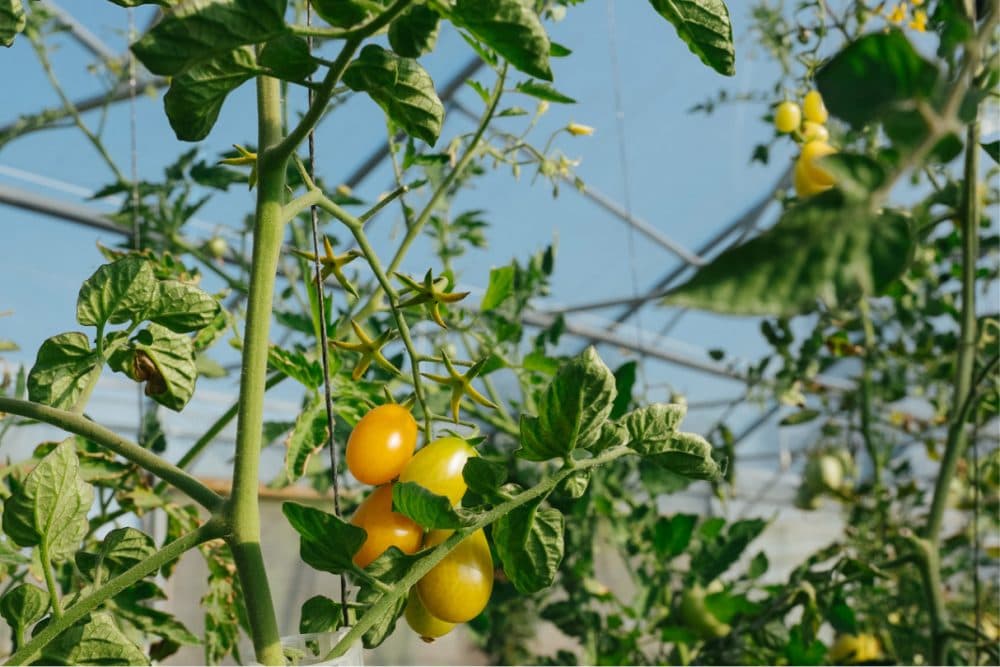
More than 10 hectares, over 50 tonnes of annual production. The vegetables arrive at L'Arpège every morning by TGV.
"I entrusted my creativity to nature — it is nature that dictates my gesture."
21 July 2025: the culmination
On 21 July 2025, Passard announces:
"From today, the Arpège restaurant will celebrate an exclusively plant-based cuisine."
L'Arpège becomes the first fully plant-based French three-Michelin-star restaurant: no more meat, no more fish, only vegetables, fruit, herbs, flowers, and honey from his hives.
Technique follows: plant extractions instead of carcass juices, power obtained through evaporation, fermentation, maceration. The mignardises become young vegetable shoots. The famous apple rose bouquet tart embodies this pure plant emotion.
A master for an entire generation
Out of L'Arpège come Pascal Barbot, David Toutain, Mauro Colagreco, Bertrand Grébaut… All of them will carry forward this reverence for the product and for plants.
Netflix devotes the first episode of Chef's Table France to him. In 2016, he is voted best chef in the world by 534 starred chefs. Musician, sculptor, cook: a total artist.
"The most beautiful cookbook was written by nature."
Two Alains, one same direction
Ducasse already had an all-vegetable menu at Le Louis XV as early as 1987. Passard invented the plant menu before the plant-based wave. Ducasse institutionalises naturality at the pinnacle of world gastronomy; Passard sacralises the vegetable garden.
Around them, the movement grows:
- Alexis Gauthier, trained with Ducasse, turns Gauthier Soho into the first fully vegan French gastronomic restaurant.
- Claire Vallée earns France's first Michelin star for a fully vegan restaurant, with ONA.
- Daniel Humm converts Eleven Madison Park (3 stars in New York) to fully plant-based.
- Manon Fleury builds at Datil a plant cuisine of great poetic power.
The message is crystal clear: the plant is not a compromise, it is an elevation.
What this means for Le Végétalien
When Ducasse and Passard speak, world gastronomy listens. Their demonstration: plants, worked with intelligence, passion, and technique, can be more powerful, more flavourful, more moving than any animal product.
They aren't vegans in an activist sense, but their plates draw a clear and difficult-to-reverse direction.
For Le Végétalien, this means:
- It isn't marginal, nor ahead of its time: it is exactly on time.
- The codes of haute cuisine are being rewritten around the plant.
- The argument of "limited plant cuisine" no longer stands up to L'Arpège, Plaza Athénée, ONA, or Eleven Madison Park.
The plate as answer
Ducasse and Passard did not abandon high cuisine: they elevated it. Plants were always there, waiting for hands large enough to reveal them.
The next time someone claims that plant-based cuisine is limited, show them a plate from L'Arpège or a Ducasse naturality dish. The silence that follows will be the best answer.
Useful links:
Combined with a plant-based cuisine rich in fibre and colour, raw cacao and hazelnuts support serotonin production, favouring a stable mood and a deep sense of well-being. In a Ducasse or Passard logic, they become subtle touches rather than sugary excesses.
Composés actifs
Vibration of a high-cuisine plant plate
Unités Bovis (UB)
L'échelle de Bovis mesure la vitalité énergétique d'un aliment — plus le chiffre est élevé, plus l'aliment soutient la vitalité du corps. Indicatif, pas dogmatique.
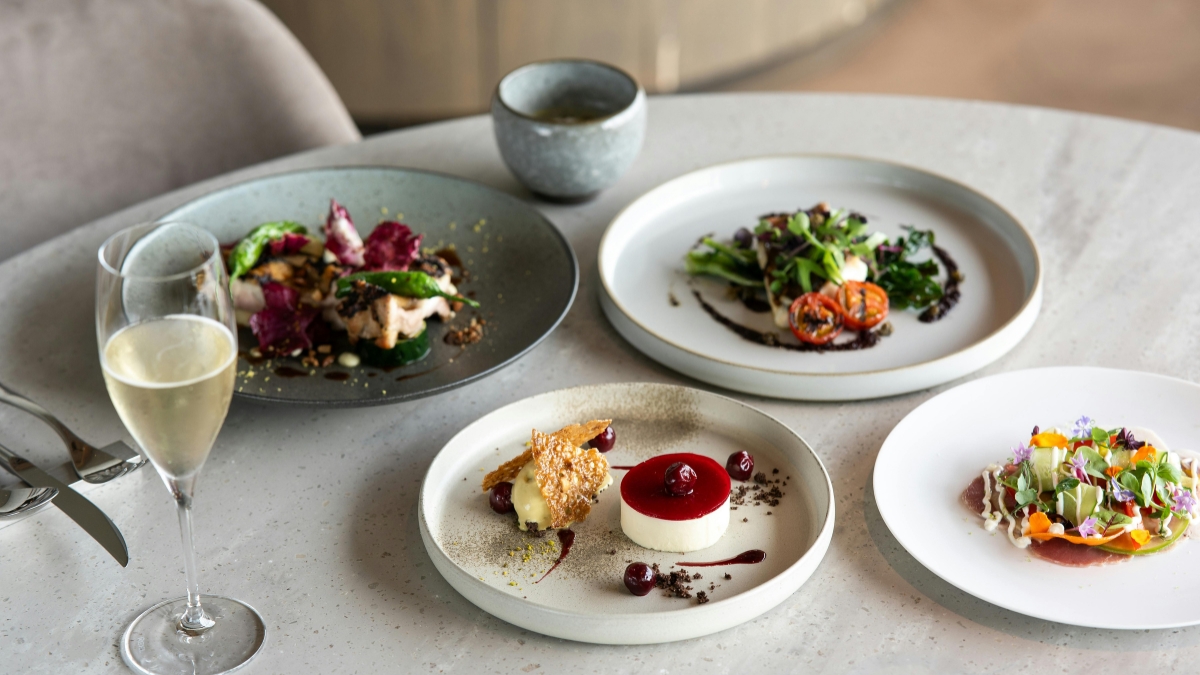
A plate imagined the way Ducasse or Passard imagines one — seasonal vegetables, heritage grains, precise cooking — sits symbolically in a high vibratory range, where pleasure, ethics, and beauty reinforce each other.
Everyday plant vs high plant cuisine
Plant cuisine
Ultra-processed plant
Industrial "vegan" products rich in additives, hidden sugars, and refined oils.
Exemples
Ultra-processed vegan snacks, industrial fake cheeses, very sweet plant desserts.
Effets
Glycaemic spikes, fatigue, heavy digestion, confusion about what a healthy plant-based cuisine really is.
Functional plant
Simple home cooking centred on vegetables, whole grains, and legumes, with no particular creative ambition.
Exemples
Basic Buddha bowls, composed salads, lentil and brown rice dishes.
Effets
Good satiety, stable energy, peaceful relationship with food but without a strong artistic dimension.
Plant haute couture
Plant-based cuisine by chefs like Ducasse or Passard: exceptional products, technical precision, aesthetics, and emotion.
Exemples
The naturality menu at Plaza Athénée, the all-vegetable tasting at L'Arpège, major three-star plant menus.
Effets
Wonder, a feeling of lightness, mental clarity, reconciliation between extreme pleasure and ethics.
The same plant can feed chaos, neutrality, or the divine. What changes everything: product quality, the cook's intention, and the level of consciousness brought to the plate.
“The most beautiful cookbook was written by nature.”
Écrit par
Virgile
Chef & Chercheur en nutrition végétale
20 ans de recherche. Chef résident Maison ilā (The Times Top 50 World Spas). Fondateur levegetalien.fr. Je formule des aliments qui transforment ce que nous ressentons et pensons.
Receive the Notebook
A weekly letter — one ingredient, one protocol, one find.
Related articles
Gauthier Soho : Quand la Gastronomie Française Devient Conscience Pure
À Soho, un chef français formé chez Ducasse a transformé son restaurant étoilé en sanctuaire 100% végétal. Portrait d'Alexis Gauthier et de sa révolution.
Alice Tuyet & La Patate : du podcast culte à l’empire végétal parisien
De La Patate à Daimant Collective, comment Alice Tuyet a transformé son histoire intime en empire végétal joyeux et fédérateur.
Les Éveillés du Végétal : Figures qui ont Compris Avant les Autres
De Pythagore à Joaquin Phoenix, un fil invisible relie les esprits qui ont embrassé le végétal avant les autres. Voyage à travers 2500 ans de conscience alimentaire.