

Raw Criollo Cacao: When Nobility Becomes Medicine
There is a chasm between chocolate and cacao. A vibrational chasm. Raw Criollo invites us to cross this threshold — toward a millennial medicine of the heart.
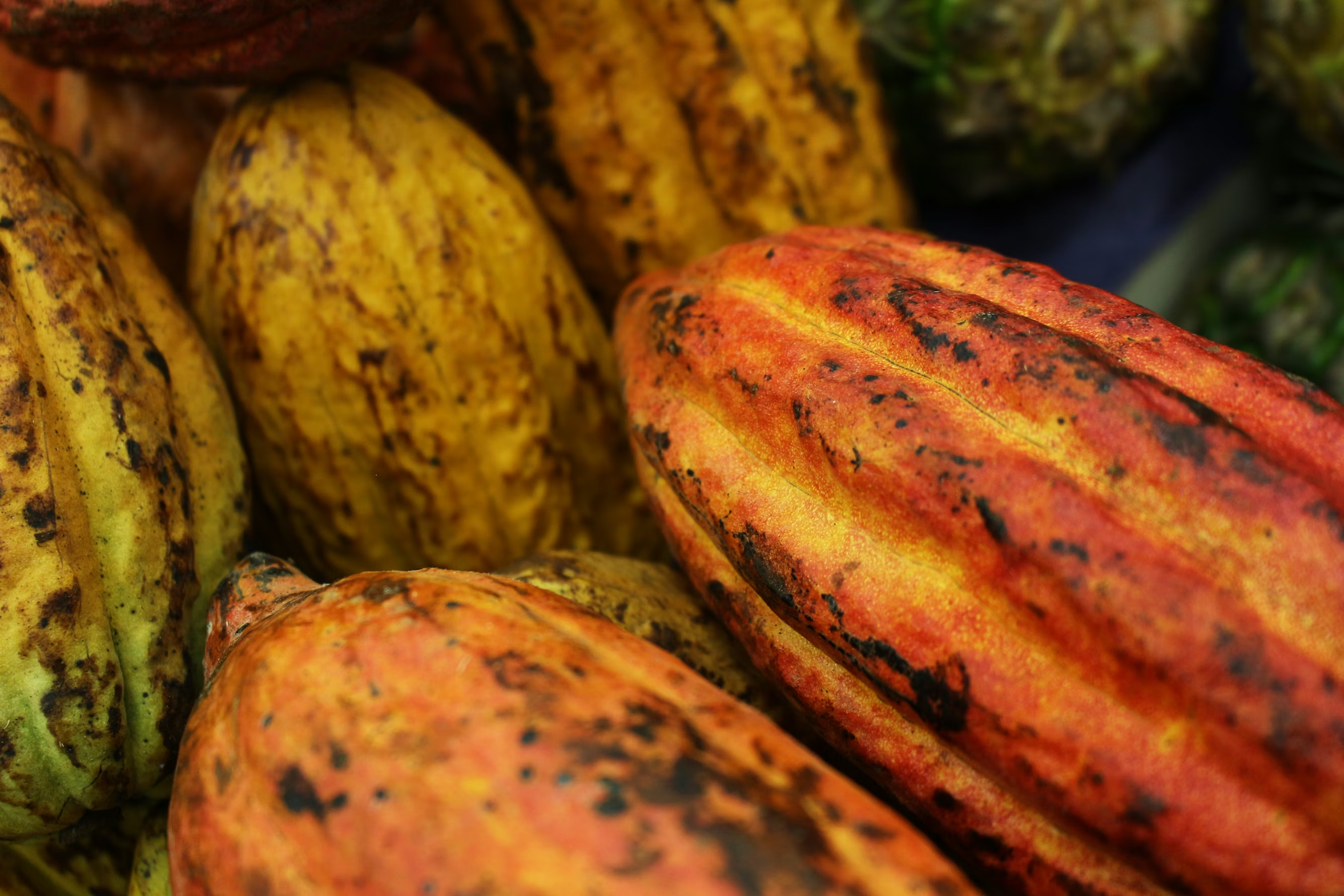
The first time you taste a raw Criollo bean, something shifts. Not only in your palate — in your field of perception. A flavour you don't yet know. Not chocolate. Something older, wilder, truer: floral, fruity, earthy, lightly acidic, profoundly enveloping.
We are so used to the flat, sweet taste of industrial chocolate that we have forgotten an essential truth: cacao is, first and foremost, a medicinal plant. Theobroma — "food of the gods" — is not a metaphor. This article is an invitation to leave the world of chocolate and enter the world of cacao — and to understand why the Criollo variety, the rarest and most noble, carries within it a complete pharmacopoeia of the heart and the mind.
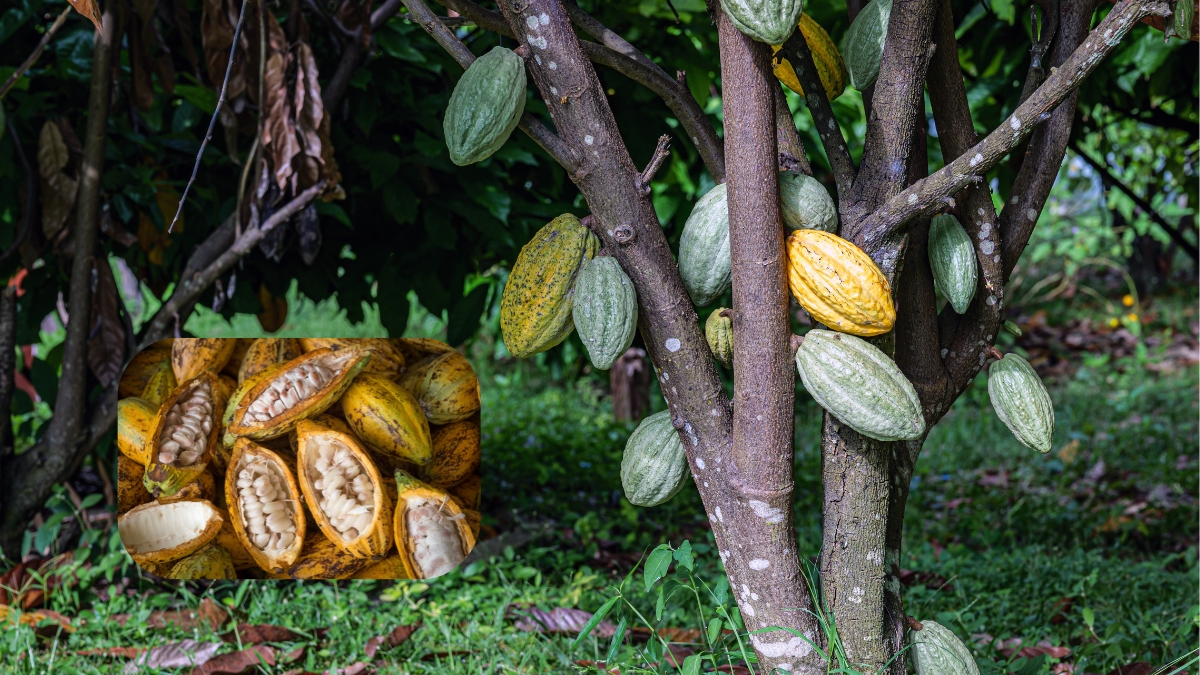
Cacao is not Chocolate
We must begin with a fundamental distinction, one the industry has every interest in erasing: cacao and chocolate are two different realities. The botanical name of the cacao tree — Theobroma cacao, "food of the gods" — was chosen by Linnaeus in 1753 because he recognised something sacred in this plant.
What we call "chocolate" is a distant echo of that original plant. High-temperature roasting destroys living enzymes. The addition of refined sugar, soy lecithin, and synthetic vanillin masks natural aromatic complexity. Industrial conching removes the most subtle volatile compounds — precisely those that carry the vibrational signature of cacao.
When the Maya and the Aztecs celebrated xocoatl, they were not drinking sweet hot chocolate. They were drinking a bitter, spiced preparation mixed with chilli and maize — a ceremonial beverage reserved for warriors, priests, and nobles. This is the tradition raw cacao invites us to rediscover.
Raw vs Roasted: What Heat Destroys
To understand why roasting became the norm, we have to go back to a concrete problem: cacao fermentation is a formidable art. For centuries, beans were fermented directly on tropical ground, under unpredictable microbial conditions — extreme heat, humidity, contaminations. Failed fermentations produced mouldy, acidic, sometimes toxic lots. And transport made everything worse: weeks in a ship's hold, with no temperature or humidity control, finished off whatever fermentation had spared.
High-temperature roasting — 140°C and beyond — became the industrial answer to this chaos. A sterilisation disguised as an aromatic process. It destroys moulds, neutralises bacteria, uniformises taste — and in passing, wipes out living enzymes, antioxidants, mood molecules, and most of what made cacao a medicinal plant. This isn't refinement: it's surrender.
And today? Perhaps more than ever, this logic persists. Failed fermentations are no problem for the chocolate industry. Mouldy lots are sterilised by roasting, aromatic defects are masked by sugar, synthetic vanillin, and soy lecithin. The consumer will never know that the bar they hold comes from beans that would have been unfit to eat without that pass through the fire. The industry doesn't roast for taste — it roasts to erase its own negligence.
This is precisely where raw cacao represents a revolution. Its existence rests on a decisive advance: controlled fermentation. By mastering temperatures, microbial conditions, and transport logistics — cold chain, ventilated containers, shorter delays — raw cacao producers obtain beans perfectly developed aromatically, cleared of their acidity, never exceeding 42°C. This threshold is crucial: beyond it, living enzymes denature, antioxidants degrade, and the subtle mood molecules — anandamide, PEA, tryptophan — begin to disintegrate.
The result is spectacular. Raw cacao retains an antioxidant profile four to ten times higher than roasted cacao. Its bioavailable magnesium content stays intact — 272 mg per 100 g, one of the most concentrated sources in the plant kingdom. Its digestive enzymes still function. And its bliss molecules are at full power. This is the difference between a fruit picked ripe and a fruit passed through the oven.
The Lineages of Cacao: Why Criollo is King
The cacao world divides into three genetic lineages. Forastero — robust, productive, aromatically simple — accounts for 80% of global production. It's the cacao of supermarket bars. Trinitario, a hybrid born in Trinidad, combines robustness with part of Criollo's finesse. It's a good compromise, often used by artisan chocolatiers.
And then there is Criollo — less than 5% of world production. The original cacao, the one the Maya cultivated with reverence. Fragile, susceptible to disease, demanding in care — it's the aristocrat of cacao. Its aromatic profile is incomparably complex: floral notes, red fruits, nuts, zero aggressive bitterness. It's the cacao of connoisseurs and ceremonies.
At the peak of this lineage: the Nacional Arriba from Ecuador — a Criollo sub-variety that many consider the absolute reference. Notes of jasmine, bergamot, wet earth after rain. This is the cacao I recommend for ceremonies and for anyone who wishes to live the cacao experience in its fullness.
The Three Lineages of Cacao
Genetic & vibrational comparison
Forastero
Robust and ultra-productive, it accounts for ~80% of world production. It is the cacao of supermarket bars — simple aromas, often masked by sugar and roasting.
Exemples
Amelonado (West Africa), Catongo (Brazil), Comum (Amazon)
Effets
One-dimensional profile, strong bitterness, low aromatic complexity, few subtle compounds
Trinitario
Hybrid born in Trinidad in the 18th century after Criollo plantations were devastated. Combines Forastero's robustness with part of Criollo's genetic finesse.
Exemples
Carenero Superior (Venezuela), Java (Indonesia), Cameroon
Effets
Good aromatic balance, fruity and woody notes, moderate bitterness — the compromise of artisan chocolatiers
Criollo
The original lineage, cultivated by the Maya with reverence. Less than 5% of world production. Fragile, susceptible to disease, demanding — it is the aristocrat of cacao.
Exemples
Porcelana (Venezuela), Chuao (Venezuela), Nacional Arriba (Ecuador)
Effets
Floral notes, red fruits, nuts, zero aggressive bitterness — incomparable aromatic complexity
The nobility of a cacao isn't measured by its percentage on the wrapper, but by its lineage, its fermentation, and its vibration.
The Exceptional Sub-Varieties
Within the Criollo lineage, certain sub-varieties reach exceptional heights. Porcelana, grown in the remote valleys of Venezuela (Zulia and Mérida states), is considered the absolute grail: its translucent white beans — hence the name — develop notes of jasmine, acacia honey, and fresh milk. Its production is so confidential that some harvests trade at over $100 per kilo.
Chuao — named after the Venezuelan coastal village reachable only by sea — benefits from a protected appellation of origin and an ancestral fermentation passed down through generations. Its aromas of red fruits, blonde tobacco, and sweet spices make it a cacao of meditation, slow and enveloping.
And Nacional Arriba from Ecuador — often placed in a category of its own, its profile is so singular: bergamot, jasmine, wet earth after rain. The old plantations of Los Ríos province, where trees grow in the shade of century-old banana trees, produce a cacao known as "Arriba" ("above") — a reference to the highlands from which it comes. It's the one I recommend for ceremonies.
The Pharmacopoeia of the Heart
"Cacao is a medicine of the heart, a bridge between the material and the spiritual. When we drink cacao with intention, we open a dialogue with forces far older than our conscious memory." — Sol Semilla
Raw cacao harbours more than 300 bioactive compounds, some of which are unique in the plant kingdom. Three major axes structure its action:
A cousin of caffeine but without the aggression. Theobromine dilates blood vessels, improves peripheral circulation, and provides slow, prolonged stimulation without the crash. It nourishes the heart as much as it opens it — which explains why 17th-century physicians prescribed cacao for pulmonary diseases.
Composés actifs
Anandamide — from the Sanskrit ananda, "bliss" — is a natural endocannabinoid that cacao is one of the very few foods to contain. Combined with PEA (phenylethylamine), the molecule of love, it opens a biochemical window onto joy without any artificial substance. Ceremonial cacao activates these two pathways simultaneously.
Composés actifs
With 272 mg of magnesium per 100 g, raw cacao is one of the most concentrated sources in the plant kingdom. This mineral is involved in more than 300 enzymatic reactions — nervous system, sleep, hormonal balance. Complemented by iron (cellular oxygenation) and zinc (immunity and skin), it offers a complete neuro-mineral support kit in a single bean.
Composés actifs
Key Bioactive Compounds (per 100 g raw cacao)
- Magnesium: 272 mg (68% of RDI) — muscle relaxation, nervous system regulation, over 300 enzymatic reactions. The most concentrated plant source after seaweed.
- Theobromine: 1,200 – 2,500 mg — gentle vasodilator, cardiac stimulation without nervousness (unlike caffeine). Duration of action: 6 to 8 hours. The name literally means "food of the gods".
- Flavonoids (catechins & epicatechins): 3,500 – 5,000 mg — powerful antioxidants (ORAC score ~95,500), cardiovascular protection, anti-inflammatory. Raw cacao contains 4 to 10 times more than roasted.
- Anandamide: active traces — natural endocannabinoid (from the Sanskrit ānanda, "bliss"). Cacao is one of the rare foods to contain it. Feeling of well-being, emotional openness. Effect potentiated by enzyme inhibitors naturally present in the bean.
- PEA (Phenylethylamine): 0.5 – 2 mg — nicknamed the "love molecule", released naturally in the state of being in love. Supports concentration, positive mood, and motivation.
- Iron: 13.9 mg (77% of RDI) — cellular oxygenation. Tryptophan: 290 mg — precursor of serotonin and melatonin, supports sleep and mood.
Cacao Ceremony
There is a use of cacao that transcends nutrition and enters the domain of the sacred. The cacao ceremony, inherited from Mesoamerican traditions, is a meditative practice centred on opening the heart chakra — Anahata.
The dose: 40 to 50 grams of raw cacao paste. This is a ceremonial dose — more concentrated than a daily use, it opens doors that nutritional doses only graze.
The intention: Sit for a few minutes in silence. Formulate a precise question you carry in your heart. Cacao is an amplifier of intention — what you put into it, it magnifies.
The preparation: Hot water at 40°C max, poured over the grated cacao. Whisk slowly. Add, if you wish, a pinch of cayenne pepper, some cardamom, or raw honey. No milk — caseins inhibit the absorption of flavonoids.
The ingestion: Drink slowly, in full consciousness. Afterwards, close your eyes, place your hands on your heart. The effect unfolds over 20 to 40 minutes: a soft warmth in the chest, a crystalline mental clarity, a feeling of deep connection. This isn't recreational. It is sacred. The results are proportional to the quality of your presence.
"In every plant, a cosmic force lies asleep, waiting to be awakened by human consciousness." — Rudolf Steiner
Fournisseur Pépite
Rrraw
Chocolat cru artisanal
“RRRaw embodies the excellence of raw cacao in France. Their Nacional Arriba is a taste revelation — aromatic complexity, zero aggressive bitterness, palpable vibration. This is the cacao I recommend with eyes closed.”
Conversation with Yoan Dejoie, Anthropologist of Cacao
There are people whose meeting changes how you look at what you eat. Yoan Dejoie — PhD candidate in anthropology at Université Côte d'Azur, trained at the International Institute of Chocolate and Cacao Tasting, with fieldwork among producing communities in Central America — is one of them. It was he who gave me the grid of the three uses of cacao, and who reminded me that 17th-century French physicians didn't prescribe cacao out of poetic intuition, but because the clinical results were there.
Our long conversation explores the forgotten history of medicinal cacao, the supply chains of exceptional cacao, and why what we call "chocolate" is an amputation of what this plant used to be. I recommend listening to it with a cup of raw cacao in your hands. Watch the full interview →
Vibrational scale of cacao
Unités Bovis (UB)
L'échelle de Bovis mesure la vitalité énergétique d'un aliment — plus le chiffre est élevé, plus l'aliment soutient la vitalité du corps. Indicatif, pas dogmatique.
Sugar, milk, additives — minimal vibration
High roasting, impoverished aromatic profile
Better raw material, moderate roasting
Enzymes preserved, antioxidants intact
Noble lineage, mastered fermentation, aromatic complexity
French excellence, complete vibrational profile
The absolute reference — jasmine, bergamot, food of the gods
The nobility of cacao is measured by its vibration, not by its cacao percentage.
Frequently Asked Questions
Does raw cacao contain caffeine?
Yes, but in very small quantity: about 20 to 30 mg per 100 g, or 10 to 15 times less than an espresso. The stimulating effect of cacao comes mainly from theobromine (1,200 – 2,500 mg/100 g), which acts more slowly, more sustainably, and without the nervousness associated with caffeine. It is a stimulation of the heart, not of cortisol.
How much raw cacao should you consume per day?
For daily nutritional use: 15 to 30 g (the equivalent of one to two level tablespoons of powder, or 5 to 10 beans). For an occasional ceremonial use: 40 to 50 g of raw cacao paste, prepared as a hot drink (max 42°C). Beyond 50 g, the effects of theobromine can become uncomfortable (nausea, palpitations) in sensitive individuals.
Can you consume raw cacao during pregnancy?
Theobromine crosses the placental barrier. At moderate doses (10 – 15 g/day), most studies report no negative effects — some even suggest a beneficial effect on pre-eclampsia. However, ceremonial doses (40 g+) are not recommended during pregnancy and breastfeeding. If in doubt, consult your midwife or doctor.
Where can you find true raw Criollo cacao?
Three non-negotiable criteria: identified lineage (Criollo or Nacional Arriba, not simply "raw cacao"), fermentation controlled below 42°C, and complete traceability (origin, producer, batch). In France, Rrraw is the reference I recommend. For ceremony cacao, look for "ceremony grade" labels with verifiable provenance (Guatemala, Ecuador, Peru). Beware of cheap powders labelled "raw cacao" without any information on the lineage.
Honouring the Living
Choosing raw Criollo cacao over conventional chocolate isn't a gourmet whim. It is an act of honour towards the living. The transition from chocolate to raw cacao is a path of no return — not because we deny ourselves, but because we no longer want to go back. Once you have tasted the depth, the complexity, the vibration of a Criollo bean harvested at ripeness, fermented with care, and never roasted, the industrial bar loses all interest.
Each bean is an invitation to remember that food can be medicine, ceremony, connection. Raw Criollo cacao is one of those keys. It opens the door of the heart.
The day I stopped eating chocolate and started living cacao, I understood that food isn't what enters the body — it's what awakens the soul.
Écrit par
Virgile
Chef & Chercheur en nutrition végétale
20 ans de recherche. Chef résident Maison ilā (The Times Top 50 World Spas). Fondateur levegetalien.fr. Je formule des aliments qui transforment ce que nous ressentons et pensons.
Receive the Notebook
A weekly letter — one ingredient, one protocol, one find.
Related articles
Café, Chocolat, Thé : Entre Chaos Cellulaire et Haute Cohérence
Le même mot peut désigner un poison lent ou un élixir de lumière. Tout se joue dans la culture, la transformation et la préparation.
Cosmic Dealer : Ayurveda, Chocolat Cru & Design Parisien
Il existe une marque parisienne qui a déclaré la guerre au sucre — et l’a gagnée avec du chocolat cru cérémoniel, des nootropiques et un design qui vibre.
Nootropiques Végétaux — Les Plantes qui Transforment le Cerveau
Quand la science des neurotransmetteurs rencontre la sagesse des plantes, une nouvelle forme de performance émerge — durable, précise, profondément alignée.