

Blue Spirulina: The Cosmic Food of Primordial Oceans
3.5 billion years old, spirulina may be the planet's most ancient food. Its sacred blue-green holds the secrets of life itself.
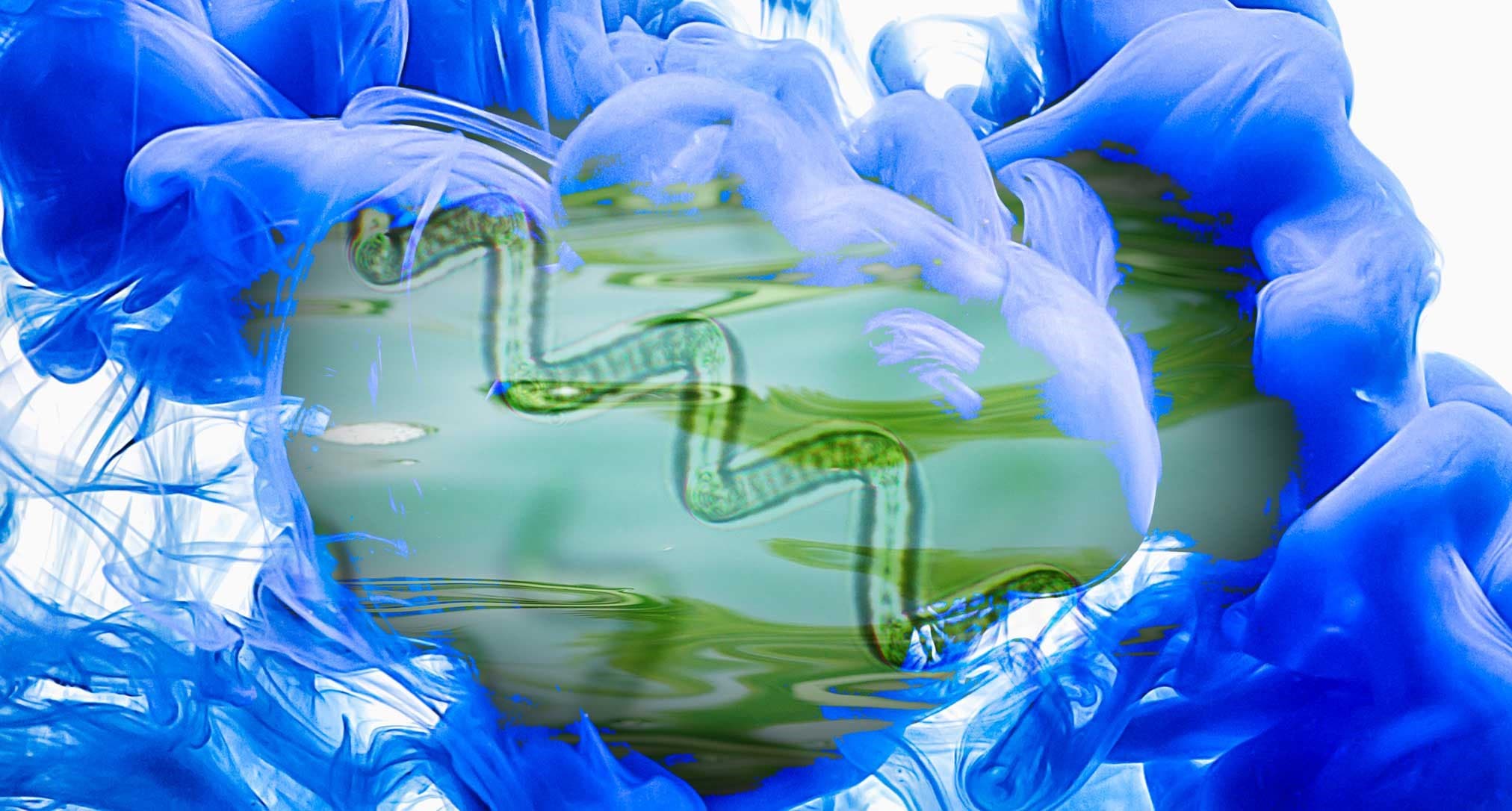
Before the forests, before the flowers, before the first animal drew breath — there was spirulina. A cyanobacterium that has been photosynthesising for 3.5 billion years. When we consume spirulina, we ingest the memory of the primordial oceans, the blueprint of life itself. This blue-green powder, so modest in appearance, carries within it the entire history of our planet — from the first molecule of oxygen released into a still-sterile atmosphere to the cosmic soups that nourished lost civilisations.
Spirulina is not a mere food supplement. It is a living bridge between the cosmos and our plate. NASA has studied it as potential food for long-duration space missions. The Aztecs harvested it from Lake Texcoco and called it tecuitlatl — "stone excrescence". The Kanembou people of Chad still harvest it today on the banks of Lake Chad, dried into cakes called dihe. Everywhere humanity has sought essential food, it has found this blue-green spiral — as if the planet itself were whispering a fundamental nutritional secret.
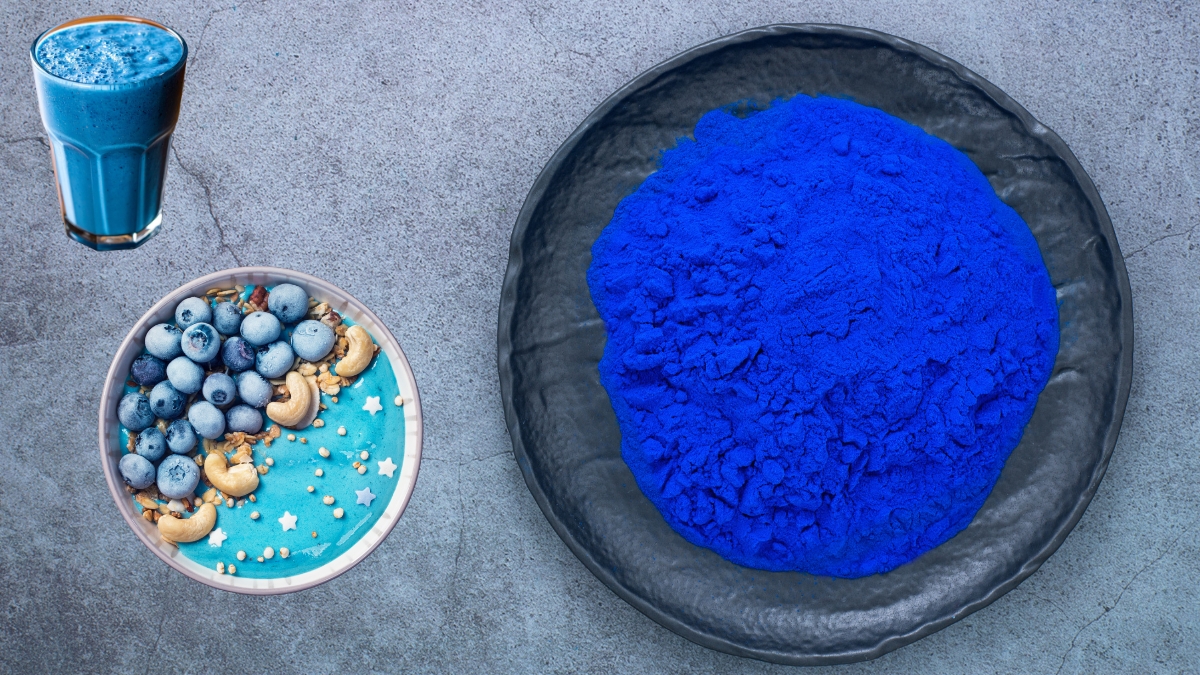
The Primordial Alga
Let's clarify a fundamental subtlety straight away: spirulina is not a plant. It is a cyanobacterium — one of the very first photosynthetic organisms to appear on Earth. 3.5 billion years ago, long before terrestrial life existed, cyanobacteria like Arthrospira platensis were already beginning to transform sunlight into living matter. It is they who, patient day after patient day, released the oxygen that transformed Earth's atmosphere and made all animal life possible. In a very literal sense, we breathe thanks to spirulina's ancestors.
3.5 billion years of evolution have perfected its nutritional profile with an elegance no human biotechnology could match. Spirulina has survived the five great mass extinctions, the ice ages, the meteoritic bombardments. Its genome is a masterpiece of resilience. And when NASA searches for the ideal food for long-duration space missions — dense, complete, cultivable in a closed environment — it turns to spirulina. The food of the future is also the oldest on the planet. There is a poetry here that only the living can write.
The Aztecs harvested it from the alkaline waters of Lake Texcoco, at the heart of their empire. Sixteenth-century Spanish chroniclers describe with astonishment these blue-green cakes sold in the markets of Tenochtitlan, consumed by warriors before battle. The Kanembou people of Chad carry on this millennial tradition, harvesting dihe in the natron-rich ponds of Kanem. Two civilisations separated by an ocean, arriving independently at the same conclusion: this microscopic spiral is a pillar of human survival.
The Secret Lies in the Blue
Phycocyanin. Remember this name. It is the soul of spirulina — the sacred blue pigment that gives it its celestial colour and most of its therapeutic powers. Derived from the Greek phyco (alga) and kyanos (blue), this chromoprotein is the most powerful antioxidant ever discovered in the living world — 40 times more potent than vitamin C, 20 times more than vitamin E. It is anti-inflammatory, neuroprotective, hepatoprotective. And it is extremely fragile.
This is where everything is decided. Phycocyanin is heat-sensitive: above 42°C, it begins to denature. At 60°C, it is destroyed. Yet the vast majority of commercial spirulina is dried at high temperature in industrial ovens — fast, economical, and devastating. The result? That dull green, bitter powder everyone knows. A spirulina emptied of its blue substance, of its vibrational soul. Like an oxidised wine that has lost its bouquet, the calories remain but the intelligence is gone.
Colour is the first indicator of vibrational quality. A living spirulina is intense blue-green, almost electric. The work of biophysicist Fritz-Albert Popp on biophotons suggests that living cells emit coherent light — and that this emission is directly correlated with the organism's vitality. A raw spirulina rich in intact phycocyanin emits more biophotons than a heat-treated one. The blue light of phycocyanin isn't only beautiful — it is literally alive.
The Spirulina Pharmacopoeia
Spirulina is not a one-note food. It is a full orchestra, where each instrument plays a precise role in the nutritional symphony. Let's detail the main movements.
Phycocyanin — The most powerful antioxidant ever discovered in nature. A major anti-inflammatory, it inhibits cyclooxygenase-2 (COX-2) with an efficacy comparable to certain pharmaceutical anti-inflammatories, without any of their side effects. Neuroprotective, it shields dopaminergic neurons from oxidative stress — a property studied in the context of neurodegenerative diseases. Hepatoprotective, it supports liver detoxification. Its blue is its signature, its passport of vitality.
Bioavailable iron — This is the pillar for every plant-based eater. Spirulina contains about 28 mg of iron per 100 g, in non-heme form but remarkably well absorbed thanks to the absence of phytic acid and the natural presence of vitamin C and chlorophyll that ease assimilation. Combined with lemon juice or acerola, its absorption approaches that of heme iron. It is the elegant answer to the eternal question: "But where do you get your iron?"
Complete proteins — 60 to 70% of spirulina's dry mass is protein containing the eight essential amino acids. Its digestibility reaches 95%, compared to 20% for red meat. This ratio is dizzying. Gram for gram, spirulina surpasses most animal protein sources — not only in quantity but in quality of assimilation. The body doesn't need to "fight" spirulina to integrate it: it fits into our biochemistry like a key into its lock.
Vitamin B12 — This question is controversial and deserves honesty. Spirulina contains B12, but a significant portion is in the form of analogues (pseudovitamin B12) whose bioavailability in humans is debated. It cannot be considered a sole B12 source. However, studies show that it contributes to the overall pool and that its regular consumption improves B12 serum markers in vegans. Consider it an ally, never a complete substitute.
Chlorophyll, beta-carotene and GLA — Chlorophyll detoxifies the blood and alkalises tissues. Beta-carotene (provitamin A) protects vision and skin. Gamma-linolenic acid (GLA), a rare anti-inflammatory omega-6 fatty acid, regulates prostaglandins and supports hormonal balance. This trio completes the picture of a plant pharmacopoeia of unmatched nutritional density.
Spirulina doesn't target a single neurotransmitter but nourishes the whole terrain. Its richness in iron, B12, and essential amino acids supports the synthesis of every neurotransmitter. Phycocyanin protects neurons from oxidative stress, preserving synaptic transmission and neural plasticity. The tryptophan it contains is the direct precursor of serotonin, while phenylalanine fuels the dopaminergic pathway.
Composés actifs
Pillar of Plant-Based Nutrition
Let's be direct. If you walk a plant-based path and don't consume spirulina, you're missing one of the most fundamental pillars of your nutritional balance. Not as a luxury, not as a bonus — but as a strategic necessity.
The three classic vulnerabilities of a plant-based diet are iron, B12, and complete protein. Spirulina addresses all three simultaneously. No other single food offers this triple coverage. By adding 5 to 10 grams of raw spirulina per day, you close the non-heme iron gap, you contribute to the B12 pool, and you bring in a protein complement of exceptional digestibility. It's the insurance policy of the conscious plant-based eater.
Too many people give up plant-based eating because of avoidable deficiencies. Chronic fatigue, mental fog, hair loss, pallor — symptoms lazily blamed on "plant-based nutrition" when they are in fact signs of plant-based nutrition poorly mastered. Spirulina, combined with methylcobalamin B12 supplementation and intelligent protein balance, eliminates these fragilities. Not by magic, but by precise biochemical understanding.
Quality Criteria
Not all spirulina is equal. The difference between heat-treated industrial spirulina and raw artisan spirulina is as profound as the difference between a pasteurised juice and a fresh-pressed one. Here are the non-negotiable criteria for choosing a spirulina worthy of the name.
Raw (<42°C) — This is criterion number one. If the spirulina has been dried above 42°C, phycocyanin is degraded, enzymes destroyed, and vitality extinguished. Cold drying or freeze-drying preserves the entire bioactive profile. Non-bitter taste — A quality raw spirulina is never bitter. Bitterness is the sign of oxidation, contamination, or aggressive drying. The taste should be soft, marine, slightly umami. Intense blue-green colour — Colour doesn't lie. Dull green = degraded phycocyanin. Vibrant blue-green = intact vitality. Trust your eyes.
Controlled origin — Spirulina is a powerful bioaccumulator: it absorbs everything in its culture medium, including heavy metals (lead, mercury, arsenic). Favour French or European artisan farms with batch analyses available, organic certifications, and full traceability. Systematically avoid spirulina imported from China or India without independent testing, where heavy-metal contamination is a documented risk.
Vibrational scale of spirulina
Unités Bovis (UB)
L'échelle de Bovis mesure la vitalité énergétique d'un aliment — plus le chiffre est élevé, plus l'aliment soutient la vitalité du corps. Indicatif, pas dogmatique.
Nutrient degradation, dull green colour, bitter taste
Variable quality, sometimes excessive compression
Better-preserved nutrients, livelier colour
Phycocyanin intact, non-bitter taste, maximum vitality
Maximum concentration of the vital pigment, optimal absorption
The intense blue-green colour is the first indicator of spirulina's vibrational quality.
“Algae carry within them the memory of the origins. They are the bridge between cosmic forces and earthly matter, between primordial light and the food of humankind.”
My Phycocyanin Formulations
Spirulina is not just a supplement I add to a smoothie. It has become the founding pigment of my alchemical creations. When I began formulating nootropic bars targeting different neurotransmitters, I was searching for a visual signature that embodies this philosophy of vibrational nutrition. Phycocyanin imposed itself naturally — its deep blue is the colour of cellular intelligence, oceanic memory, the link between sky and earth.
Each blue bar is a precise equation. Cold-extracted phycocyanin combines with raw cacao butter (lipid vehicle), activated nuts (protein matrix), and a specific cocktail of adaptogens according to the objective: lion's mane for cognition, ashwagandha for resilience, rhodiola for energy. Spirulina isn't an ingredient — it's the alchemical binder, the vibrational mediator that harmonises the whole.
What I've learned formulating with phycocyanin is that this molecule doesn't tolerate approximation. Too much heat during mixing? The blue fades. A pH too acidic? The colour turns green. Each formulation is a dialogue with the molecule itself, a respectful negotiation between the creator's intention and the intelligence of matter. This is alchemy: not forcing nature, but co-creating with her.
Conclusion: Cosmic Food
When we consume spirulina, we connect to 3.5 billion years of life on Earth. We ingest the memory of the primordial oceans, the patience of aeons, the wisdom of an organism that has travelled through every planetary catastrophe without ever ceasing to turn light into life. This isn't gratuitous poetry — it's biology.
The blue-green of this microalga is the colour of our origins. Before the red of blood, before the green of terrestrial chlorophyll, there was this blue — the blue of phycocyanin, the blue of Archean seas, the blue of the sky these very cyanobacteria made possible by releasing oxygen. We carry that colour in our veins, in the haemoglobin that structurally resembles chlorophyll, in the melatonin that rhythms our nights.
True nutrition isn't only about nutrients, grams, and milligrams. It is an act of reconnection to the intelligence of the living. Every spoonful of raw spirulina is a silent communion with the forces that brought life to this planet. It is an invitation to remember that we are, at the deepest level of ourselves, beings of light nourished by the cosmos.
Spirulina doesn't only feed the body. It feeds memory — the memory of our cells, of the Earth, of the universe that flows through us. To consciously eat this primordial food is to honour the 3.5 billion years that came before us and to prepare the billions to come.
Écrit par
Virgile
Chef & Chercheur en nutrition végétale
20 ans de recherche. Chef résident Maison ilā (The Times Top 50 World Spas). Fondateur levegetalien.fr. Je formule des aliments qui transforment ce que nous ressentons et pensons.
Receive the Notebook
A weekly letter — one ingredient, one protocol, one find.
Related articles
Nootropiques Végétaux — Les Plantes qui Transforment le Cerveau
Quand la science des neurotransmetteurs rencontre la sagesse des plantes, une nouvelle forme de performance émerge — durable, précise, profondément alignée.
Protéines Végétales : L'Alchimie du Vivant
On vous a posé mille fois la question « mais où tu trouves tes protéines ? ». Cet article ne vous donne pas un tableau de plus. Il vous emmène dans un voyage à travers l'ADN, les biophotons et l'intelligence du vivant — pour comprendre enfin pourquoi le règne végétal n'est pas une alternative de seconde zone, mais la source première.
Full Power — Comprendre l'Énergie du Corps
Et si l'énergie que nous ressentons — notre clarté, notre feu, notre paix — n'était pas un don du hasard, mais le résultat direct de ce que nous donnons à nos cellules ?